
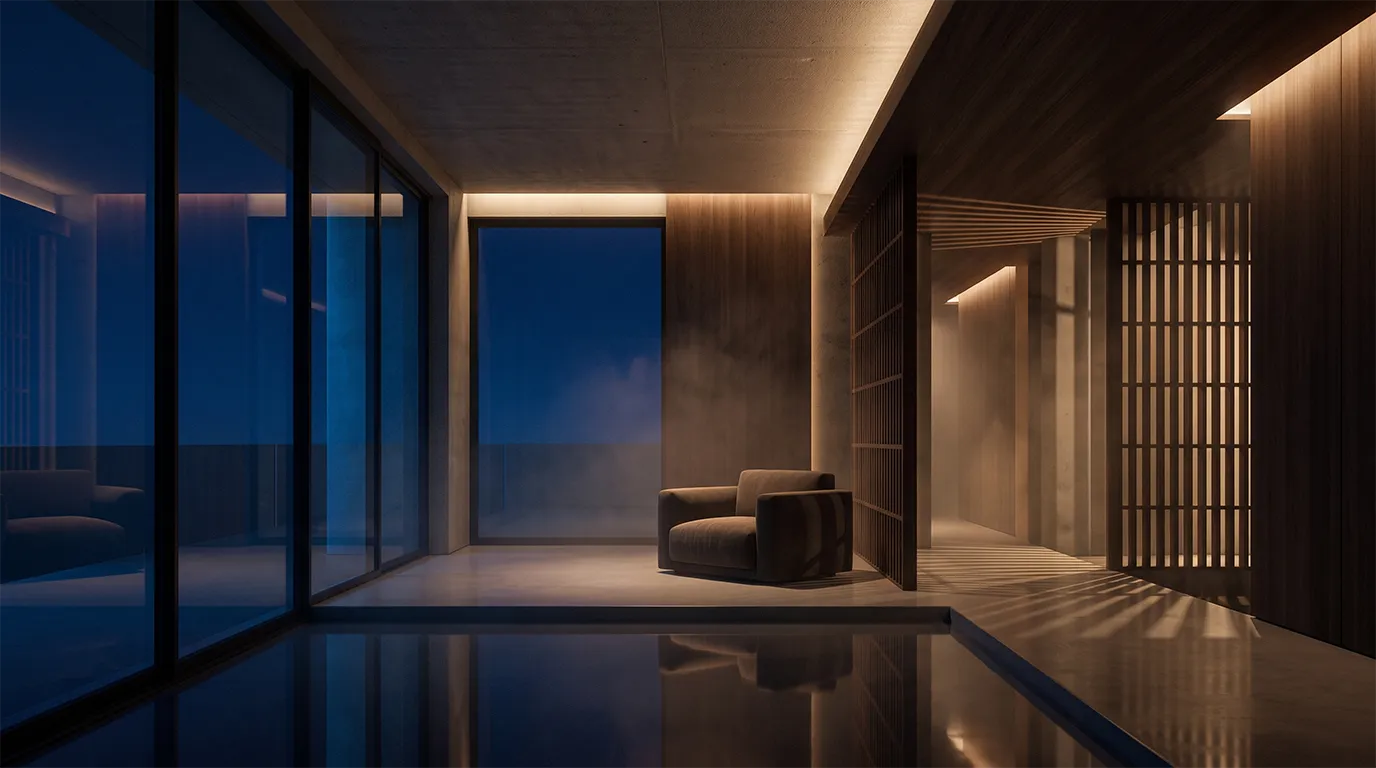
Sleep music used to be easy to define.
Slow piano. Gentle melodies. Perhaps the sound of rain in the background.
Today, the boundaries are considerably harder to draw.
Open the sleep section of a major streaming platform and you can move from minimalist ambient music to brown noise, distant thunderstorms, atmospheric drones, binaural beats, classical compositions, ocean recordings and music that sounds more like an imaginary environment than a traditional song.
Sleep music is becoming less of a single genre and more of a listening function.
The question is no longer simply what kind of music people listen to.
It is what they want that sound to do.
From Songs to Sound Environments
One of the most interesting developments in sleep music is the movement away from conventional song structures.
Traditional music tends to reward attention. Verses lead into choruses. Melodies return. Rhythms establish expectations. Changes create moments that listeners notice.
Music intended for sleep often has a different objective.
The listener may actively not want to notice what happens next.
That creates space for long ambient passages, restrained arrangements, drones, environmental recordings and compositions where changes happen slowly enough that they never become disruptive.
Spotify’s current Sleep section illustrates just how broad this listening behaviour has become. Alongside ambient piano and classical sleep playlists are collections built around rain, oceans, white noise, brown noise, binaural beats and frequency-based audio. More atmospheric concepts such as Floating Through Space, Atmospheric Calm and Late Night Nature Music sit within the same sleep ecosystem.
The common denominator is not necessarily genre.
It is low-demand listening.
What Does Sleep Music Actually Sound Like?
There is research suggesting that music associated with sleep has identifiable characteristics.
A study examining 225,626 tracks collected from Spotify sleep playlists found that, compared with music more generally, sleep music tended to be softer, slower and more often instrumental.
But the researchers also discovered something important.
There was considerable variation.
The tracks could be separated into six distinct subgroups, and some included music that was faster, louder and more energetic than what we might normally imagine as sleep music.
That suggests there may not be one universal formula for what sleep music should sound like.
A later study comparing Spotify playlists created for sleep, relaxation and energy reached a similarly nuanced conclusion. Sleep playlists frequently contained acoustic and instrumental music, while nature sounds were particularly prominent. Around half of the sleep playlists examined consisted of solo piano or piano combined with ambient drones. Others contained ambient electronic music, lo-fi, white noise or brown noise.
In other words, the modern sleep category is not one sound.
It is an ecosystem.
Why People Listen to Music Before Sleep
Using music as part of a nighttime routine is more than a streaming trend. Researchers have investigated whether listening to music can actually influence sleep.
A Cochrane review examined 13 studies involving 1,007 adults experiencing sleep difficulties. It found moderate-certainty evidence that listening to music can improve subjective sleep quality compared with no intervention or usual treatment.
However, the scientific picture is more complicated than simply saying that music makes people sleep better.
The researchers had much less confidence in evidence concerning other outcomes, including insomnia severity, how quickly people fall asleep, total sleep time and sleep efficiency. Objective measurements included in some of the studies also did not clearly demonstrate improvements in those outcomes.
That distinction matters.
Sleep music should not be presented as a cure for insomnia.
Instead, the evidence suggests that music can be a useful part of the nighttime experience for some listeners, particularly when it comes to their perception of sleep quality.
Ambient Music Is Becoming More Functional
Sleep also reflects a wider change in how people use music.
Not every listening session is about discovering a new favourite song.
Music accompanies running, studying, working, reading, meditation, commuting and sleeping. In these situations, listeners often choose sound according to an activity or desired state rather than a specific artist or conventional genre.
Sleep is perhaps the clearest example.
Someone searching for music at midnight may not necessarily be thinking:
I want to listen to ambient music.
They may instead be thinking:
I want something that helps the room feel quieter.
Spotify itself has previously reported that “sleep” is among its most searched-for categories of music, while its research around relaxation listening found that setting a mood or atmosphere is an important reason people choose audio during quieter moments.
That difference has consequences for artists making music in this space.
The competition is no longer only between musicians.
Ambient compositions exist alongside thunderstorms, ocean waves, white noise, brown noise and other forms of functional audio within the same listening environment. Spotify currently places all of these within its broader sleep experience.
The Rise of Place-Based Ambient Music
There is another direction within ambient music that we find particularly interesting: music as a place.
Instead of treating ambient music purely as abstract texture, a release can create an imagined environment.
An empty building after closing.
A distant railway station.
A hotel corridor at night.
A room illuminated only by light from outside.
These environments give otherwise minimal music a narrative identity without requiring lyrics or conventional storytelling.
It is also the idea behind Wallstone Records artist Sleep Passage.
Sleep Passage approaches ambient music as world-building. Each release is designed around an imagined location, combining restrained sound with architecture, memory and atmosphere.
The project’s debut album, Meridian Centre, takes that concept into the silent corridors of a shopping centre after closing time. Empty escalators, forgotten storefronts, fluorescent light and quiet passageways become part of the album’s environment.
Listen to Meridian Centre on Spotify
The intention is not to tell listeners exactly what they should imagine. Instead, the environment provides a starting point while leaving enough space for the listener to disappear into it.
Why Visual Identity Matters in Sleep Music
This shift toward environments also changes the role of artwork.
If music is being presented as a destination rather than simply a sequence of tracks, the visual world can become part of the listening experience.
A cover depicting an empty corridor creates one expectation before the first sound begins.
A dark forest suggests something different.
So does a rainy window, an empty airport terminal or an illuminated room at night.
This relationship between sound and environment is particularly relevant to atmospheric ambient music. The artwork can establish a world without explaining exactly what the listener should experience within it.
It establishes the doorway.
The music takes over from there.
Sleep Music Is Splitting Into Micro-Experiences
The broad category of “sleep music” is increasingly better understood as several overlapping listening experiences.
Spotify’s current sleep offering demonstrates this particularly clearly. There are dedicated experiences for minimalist deep-sleep ambient, sleep piano, classical music, nature sounds, rain, oceans, white noise, brown noise and binaural beats.
Individual sleep playlists can also attract substantial audiences. Current third-party Spotify playlists focused specifically on ambient deep sleep show tens of thousands of saves, while others organise several hours of music around the progression from initial relaxation toward deeper sleep.
This fragmentation creates room for more distinctive identities.
Rather than attempting to create generic “relaxing music,” artists can build around more specific experiences.
Music for reading late at night.
Environmental ambient.
Liminal ambient.
Dark but comforting soundscapes.
Music for falling asleep.
Immersive fictional environments.
For independent artists, specificity can create a much clearer identity than attempting to sound like everything already contained within a giant sleep playlist.
From Genre to Context
Perhaps the larger trend is that the boundaries between genres become less important when music is chosen for a specific purpose.
A listener looking for sleep audio may move between ambient music, piano, environmental recordings and brown noise without thinking of those as separate musical categories.
The context connects them.
This is one reason ambient music fits naturally within the sleep ecosystem. It can function as music while simultaneously creating an environment.
That does not mean all ambient music is sleep music, or that sleep music needs to be ambient.
The research into hundreds of thousands of sleep-playlist tracks actually suggests the opposite. People’s choices are remarkably varied.
What matters is the relationship between the listener, the sound and the moment in which it is being used.
What Comes Next for Sleep Music?
The future of sleep music may therefore be less about discovering a single sound that supposedly makes everyone sleep.
Listeners are different. Sleep routines are different. Musical preferences are different.
The available scientific evidence is promising in some areas, particularly subjective sleep quality, but it remains incomplete in others.
What is clear from today’s streaming landscape is that listeners have embraced an enormous spectrum of nighttime sound.
Sometimes that means piano.
Other times rain.
Sometimes brown noise.
Sometimes it is an ambient composition that feels like walking through a building where everyone else has already gone home.
As those boundaries continue to blur, sleep music may become increasingly personal, contextual and environmental.
Perhaps the most interesting sleep music of the coming years will not simply ask:
What should sleep sound like?
It will ask:
Where do you want to go when the world becomes quiet?
Frequently Asked Questions
What is sleep music?
Sleep music is a broad term for music and sound used during relaxation, bedtime or sleep. It can include ambient music, gentle piano, classical music, environmental recordings and other low-intensity audio. Streaming services increasingly place these alongside rain, ocean sounds, white noise and brown noise within sleep-focused listening categories.
Can music actually help you sleep?
Research suggests that music may improve subjective sleep quality for some people. A Cochrane review of 13 studies involving 1,007 adults with sleep difficulties found moderate-certainty evidence for improved sleep quality. Evidence concerning sleep duration, sleep efficiency, insomnia severity and other outcomes was less certain.
What kind of music is best for sleep?
There is no single type of music shown to be ideal for everyone. Research into Spotify sleep playlists found that sleep music tends overall to be softer, slower and more instrumental, but also identified substantial variation in the music people choose for sleep.
What is ambient sleep music?
Ambient sleep music generally uses restrained arrangements, slowly evolving textures and relatively few attention-grabbing changes. Unlike conventional songs, the objective is often to establish a continuous atmosphere rather than lead the listener through prominent verses, choruses and hooks.
Who is Sleep Passage?
Sleep Passage is an ambient project from Wallstone Records built around immersive fictional environments. Its debut album, Meridian Centre, explores the quiet architecture of a shopping centre after closing time through eleven ambient compositions.
References
Cochrane. Music for insomnia in adults. The review examines evidence concerning music and sleep in adults experiencing insomnia.
Read the Cochrane review
Scarratt et al. The audio features of sleep music: Universal and subgroup characteristics. The study analysed 225,626 tracks from Spotify sleep playlists.
Read the research on PubMed
Kirk & Timmers. Characterizing music for sleep: A comparison of Spotify playlists. The research compares the characteristics of sleep, relaxation and energy playlists.
Read the research
Spotify Sleep. Spotify’s current sleep hub illustrates the breadth of contemporary sleep listening, including ambient music, piano, nature recordings, white noise, brown noise and binaural beats.
Explore Spotify Sleep