
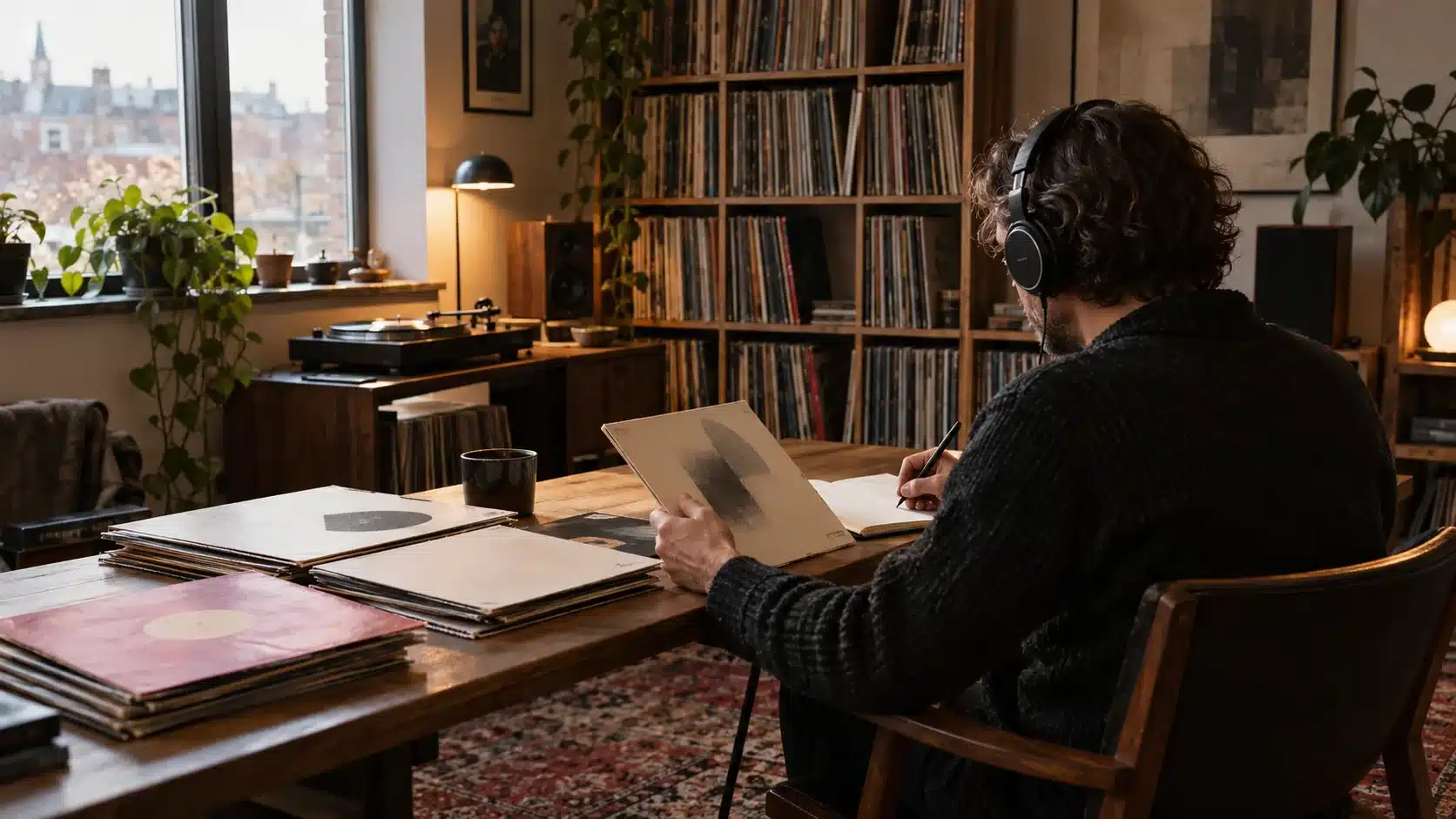
There is more music within reach than any listener, editor or label could ever properly hear. That abundance is usually described as a discovery problem, but it creates another question first: who is prepared to listen with enough patience to notice what has not yet become obvious?
Chrysalis Records and Blue Raincoat Music offered one answer on 29 September when they appointed broadcaster and journalist Steve Lamacq as Curator, New Music & Talent Development. The new consultancy role will place him alongside their A&R, management and creative teams, helping to identify and develop emerging artists.
The appointment is notable because it values something the music business often praises but struggles to define: trusted human judgment. Lamacq has spent decades listening in public, supporting alternative artists before wider recognition arrived and building credibility with audiences as well as musicians. Chrysalis and Blue Raincoat are now bringing that listening practice inside the artist-development process.
For independent labels, the useful lesson is not that every company needs a famous broadcaster. It is that discovery becomes more valuable when someone takes responsibility for what happens after they hear something promising.
Music Discovery Is Not a Search Result
Platforms are exceptionally good at making music available and connecting listeners with patterns in their existing behaviour. They can surface a track at the right time, carry it across borders and reveal an audience that an artist did not know existed.
A label faces a different task. It has to hear potential before the evidence becomes comfortable.
That means listening beyond immediate numbers. A small audience may already be unusually committed. A rough recording may contain a distinct voice that better production could strengthen. A live set may reveal more than a profile page. An artist who does not fit a current playlist category may be building the beginning of a scene rather than missing a trend.
None of those judgments is infallible. They require context, repeat listening and a willingness to remain curious when the easiest answer would be to wait for the data.
A Tastemaker and an A&R Team Do Different Work
Spotting an exciting song is not the same as developing an artist.
A broadcaster or journalist can create a meaningful first moment: a radio play, an interview, a recommendation or a live invitation that tells listeners to pay attention. A label must connect that moment to a longer sequence of decisions. Which song should come next? What should remain rough around the edges? Does the artist need a producer, more time, a stronger live set or simply protection from too many opinions?
The wording of Lamacq’s role matters here. He has not joined as a solitary oracle expected to choose winners. The announcement places him alongside existing A&R, management and creative teams. His perspective becomes one part of a wider development structure.
That is the healthier way to use individual taste. A trusted ear can notice something early, but the artist still needs people who can test the instinct, understand the practical needs and help the work grow without sanding away its character.
Trust Can Carry Music Before Scale Arrives
Lamacq’s influence was built over time. Audiences learned what his recommendations meant because they could hear the choices, disagree with them and return the next day. Artists could see that the interest extended beyond whichever sound happened to dominate one season.
That kind of trust is useful to an independent label because smaller companies rarely win through volume. They win by making fewer choices with more conviction.
A recommendation from someone with a recognisable point of view can give an unknown artist context before large numbers appear. It tells a listener that the music deserves time rather than promising that everyone already likes it. The distinction is important. Popularity confirms attention; curation can begin it.
Trust cannot simply be hired and transferred like a mailing list, however. The new role will matter only if the listening remains open, the recommendations remain credible and artists feel that development serves their music rather than the curator’s reputation.
Human Curation Needs More Than One Human
Celebrating human judgment can become romantic very quickly. Music history contains plenty of celebrated gatekeepers who missed important artists, favoured familiar networks or treated personal taste as universal truth.
The answer is not to remove people from discovery. It is to build better listening cultures around them.
A strong independent label should hear from different generations, scenes and disciplines. It should spend time in small venues, local studios and online communities without assuming that any one of those places represents the whole market. It should invite disagreement inside the team and remain alert to artists who do not resemble the last successful signing.
Data has a useful role in that process. It can reveal where listeners return, which cities respond and whether interest survives beyond an initial push. What it cannot decide is why the music matters or what kind of career would allow the artist to keep making it.
Human judgment works best when it is accountable, plural and close enough to the artist to learn.
Independent Labels Can Make Listening a Practice
Most small labels cannot create a specialist role around a career like Lamacq’s. They can still take the principle seriously.
Listening can be organised rather than left to spare moments. A team might set aside time for complete releases instead of judging only the first seconds of a track. It can follow an artist across several songs, attend an imperfect live show and ask what changed between two recordings. It can keep notes about creative development rather than only recording follower counts.
Labels can also explain their taste. A clear roster tells artists and listeners what the company values without requiring every release to sound alike. The connective tissue might be emotional detail, adventurous production, strong songwriting or a commitment to a particular local culture.
In The Future of Independent Labels, I explored why smaller labels are most useful when they act as patient partners rather than miniature major companies. Careful listening is where that partnership begins. It allows a label to understand the artist before it starts prescribing a strategy.
Development Begins With What You Hear
Chrysalis has a long history, while Blue Raincoat works across records, publishing and artist management. Bringing a trusted new-music voice into that structure suggests that discovery is not being treated as a separate marketing function. It is being connected to decisions about how artists grow.
That connection deserves attention at a moment when the industry can measure almost everything except potential.
The next important artist may already have encouraging statistics. They may also have a small room, an unfinished recording and a handful of listeners who cannot quite explain why they keep returning.
Independent labels need tools that help them find those signals. More than that, they need people willing to listen before the signals become proof.
Good curation does not predict the future with certainty. It hears a possibility, gives it context and stays long enough to help the artist make something of it.
Sources
- Chrysalis Records and Blue Raincoat Music: Steve Lamacq joins as Curator, New Music & Talent Development, press release published 29 September 2026.
- Blue Raincoat Music: About.