
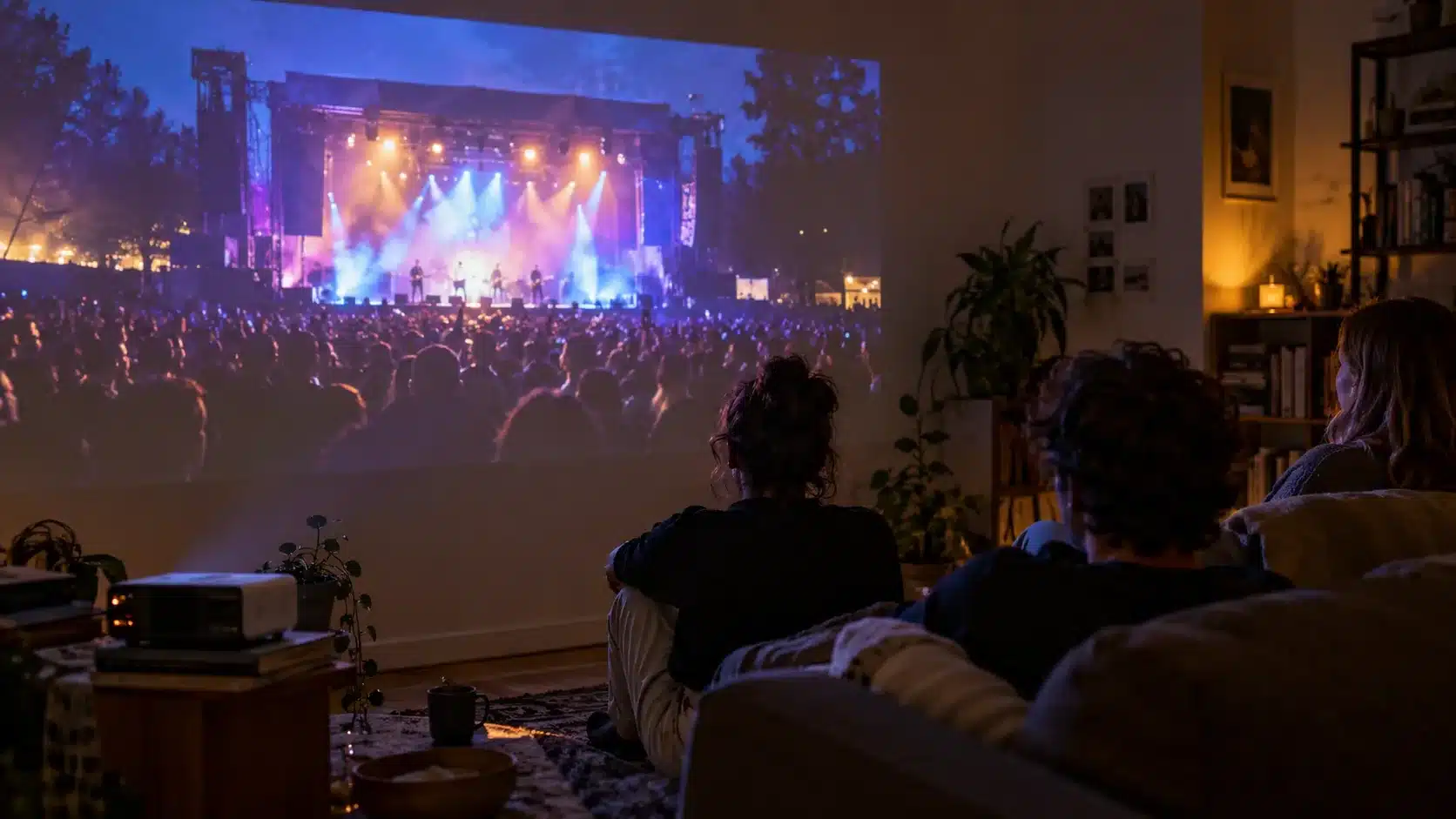
Most things on the internet wait for us. Songs remain in our libraries, videos sit in watch-later queues and festival performances reappear as clips long after the lights have gone down.
This weekend, a-nation tried something different.
The Japanese festival streamed its 3 and 4 October shows from Odaiba free on Avex’s official YouTube and TikTok channels. The audience could watch from almost anywhere, but only while the performances were happening. There was no rewind, delayed viewing or official archive.
That combination feels almost contradictory: global access with a deliberately narrow window. Yet it points towards a useful idea for live music online. A stream does not always have to become an endlessly available piece of content. Sometimes its value comes from asking people to arrive together.
Access Without Permanence
a-nation’s 22nd edition brought the festival back to Odaiba for the first time in 23 years and placed 39 acts across its programme, including the opening and Park stages. The line-up connected Japanese and Korean pop, dance and performance culture in a festival that its organisers say has welcomed more than six million people since it began.
The livestream widened that physical event beyond Tokyo. It removed a ticket price and a journey from the first point of access. A listener who could not stand inside the venue could still encounter the main stage as it unfolded.
But the digital version was not a complete substitute for being there. The Park Stage was not streamed, and the official announcement warned that some artists would appear only in part because of production circumstances. When a set ended, the online audience could not return to it.
This was access, but not ownership. The stream opened the door and then closed it again.
Why Live-Only Streaming Feels Different
On-demand media gives listeners control. We can pause a performance, skip a song, open another tab or promise ourselves that we will watch later. That convenience is valuable, but it can also weaken attention. “Later” often becomes “never.”
A live-only stream changes the decision. The important question is no longer whether the performance looks interesting enough to save. It is whether we want to be present now.
That small amount of pressure can turn solitary viewing into an occasion. Friends arrange to watch together. Fans react at the same time. A performance has a beginning that has already happened and an ending that cannot be delayed. Even from separate rooms and countries, the audience shares a clock.
In The Hardest Part of Making Music Isn’t Making Music Anymore, I wrote about the difficulty of earning sustained attention when almost every release competes with an infinite feed. A time-limited event does not solve discovery at scale, but it can concentrate the attention that already exists. It gives people a reason to stop browsing and listen.
Not Every Performance Needs to Become an Archive
Live music has always made room for moments that survive mainly in memory. A changed arrangement, a missed note, an unexpected guest or a crowd response can belong to one night without becoming the permanent version of the work.
Streaming has complicated that boundary. Once cameras are present, audiences often assume that a performance should remain available. An archive can extend the life of a show and introduce artists to new listeners, but it also turns a temporary performance into a durable media asset. That brings questions about rights, approvals, editing and how artists want the material represented.
A live-only window may make some of those decisions simpler, although it does not remove the need for permissions. More importantly, it preserves a distinction between a broadcast and a catalogue. The festival can invite a remote audience into the moment without promising that every set will become a permanent part of each artist’s public record.
That distinction may be especially useful for performances built around surprise. If every collaboration and stage idea is expected to live forever, artists have another reason to make the live show resemble the polished recording. Ephemerality can leave a little room for risk.
The Cost of Making the Moment Scarce
Scarcity is not automatically meaningful, and it is certainly not automatically inclusive.
A stream that begins at a fixed time will be inconvenient or impossible for viewers in some time zones. Work, caring responsibilities, disability, unreliable internet or a simple technical failure can turn a shared moment into a missed one. Free access does not help someone who cannot be present during the only available window.
There is also a difference between creating an occasion and manufacturing urgency. If live-only viewing becomes a routine tactic designed to provoke fear of missing out, audiences will recognise the pattern. The event needs to justify the appointment through the performance, the community around it or the feeling that something genuinely particular is happening.
For a festival as established as a-nation, a global live window can carry that weight. A smaller artist may need to give listeners more ways in: advance notice, a clear start time in several zones, accessible information and something durable for those who cannot attend.
What Independent Artists Can Borrow
The lesson is not that independent artists should delete every livestream after it ends. Most developing acts need useful material that can continue introducing them to listeners.
The more practical idea is to separate the event from the assets that follow it.
An artist could hold a live-only listening session, studio performance or release-night conversation that rewards people for arriving together. Afterwards, a selected song, an edited excerpt, photographs or a playlist can remain available. The appointment creates attention; the lasting material gives discovery somewhere to go next.
a-nation offers a version of that balance. The festival stream disappeared, but its official site later published setlist playlists for the two days. The performance remains temporary while the songs provide a route back into the artists.
That is more useful than treating disappearance as a gimmick. A fleeting event can deepen the relationship with people who attend, while a thoughtful trail of music helps those people continue listening and gives absent fans something real to explore.
A Shared Clock Can Still Matter
Streaming is usually described as a technology of abundance: more music, more access and more control over when we listen. a-nation used the same channels to create a boundary.
The festival was free to enter online, but it did not wait. Its value came partly from the fact that the audience had to meet it in time.
That will not suit every performance or every listener. Archives remain important, especially when access and discovery matter more than exclusivity. But live music does not always need to behave like a library. A broadcast can be generous without becoming permanent, and digital access can preserve some of the tension that makes an event feel alive.
The screen widened the room. The deadline made it a moment.
Sources
- Avex Portal: official a-nation 2026 livestream announcement, published 1 October 2026.
- a-nation 2026 official site, including event details, line-up and post-event setlist playlists.