
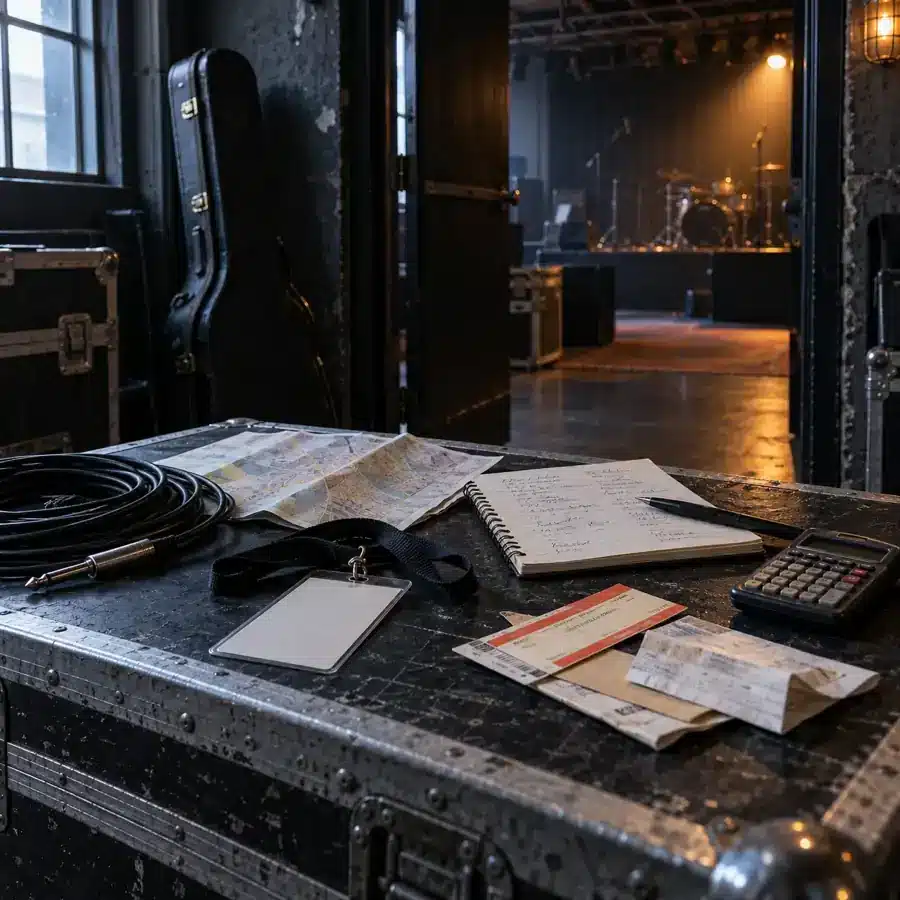
A showcase slot can look like an arrival.
The artist’s name appears on an industry programme. The room may contain agents, labels, promoters, journalists and potential collaborators. For one short set, the promise of a wider career feels close enough to touch.
But a music industry showcase is not a prize in the ordinary sense. It is an invitation to make an investment: in travel, rehearsals, accommodation, equipment, preparation and follow-up. The artist needs to know what that investment is meant to produce.
Mondo.NYC makes the question timely. Its 2026 showcase festival runs from 13 to 16 October, placing emerging artists in New York venues, virtual broadcasts and a new industry-facing performance. The event offers access to music-business professionals and media. Its published terms also state clearly that showcase performances are unpaid.
That combination is not unusual. It is why artists should judge a showcase by more than the prestige of being selected.
Selection Creates an Opportunity, Not an Outcome
Mondo says it typically receives well over 10,000 artist submissions each year and invites only a small number to perform. That selectivity gives the slot meaning. It does not tell an artist what will happen afterwards.
A showcase audience behaves differently from a normal concert audience. Some people arrive to discover music. Others are moving between meetings, watching several acts or assessing a specific business need. A strong performance matters, but it competes with a crowded schedule and a room full of unfinished conversations.
The useful question is therefore not simply, “Can we get chosen?” It is, “What can this particular room change for us?”
An artist seeking a booking agent needs the right agents to attend. A label looking for an overseas partner needs meetings with people who understand its repertoire and market. A performer testing international demand needs evidence that interest exists beyond polite applause. Without a defined purpose, the showcase can become an expensive photograph of momentum.
The Real Budget Begins Outside the Venue
An unpaid set is not automatically an exploitative one. A worthwhile showcase may create professional access that would be difficult to obtain elsewhere. However, “unpaid” never means “free”.
The artist may need transport, accommodation, visas, insurance, local equipment, baggage, food and several days away from other work. Rehearsal and preparation begin before the journey. If a team travels, every additional person changes the budget.
That is why export funding exists. PRS Foundation’s International Showcase Fund offers grants of up to £8,250 to eligible UK-based artists, songwriters and producers who receive invitations to international, industry-facing events. The programme recognises a basic reality: professional opportunity can remain inaccessible when the artist has to carry the full cost of reaching it.
Funding does not make every showcase a good decision. It changes the calculation. The artist can compare the remaining cost with a specific objective rather than treating exposure as a form of payment.
Every Promise Should Become a Question
Showcase descriptions often use broad words: discovery, exposure, access, networking and opportunity. Artists can turn each word into something more useful.
Who is expected to attend? Can meetings be arranged before the event? Will delegates receive artist information in advance? Is the show open to the public, reserved for the industry or streamed online? How will the performance be promoted? Will the artist receive audience data, press contacts or a recording afterwards?
The answers reveal whether the event supports the artist’s present stage of development.
Mondo’s terms, for example, distinguish between live and virtual showcases. They also say selected performers may receive additional performance opportunities. Its video participants must use original, wholly owned compositions and sign agreements covering master, mechanical and synchronisation permissions.
Those details matter. A streamed performance creates different rights questions from a live set in a room. Artists should understand where the recording may appear, how long it may remain available and which permissions the organiser needs before they deliver a finished video.
Fair Terms Still Matter When the Fee Is Zero
The absence of a performance fee should not erase every other professional standard.
The Musicians’ Union and Association of Independent Festivals say emerging artists should not be expected to pay to play. Their code also says fees, expenses, merchandise commission, promotion, recording permissions and practical arrangements should be agreed in writing. If an artist receives no fee, the code says the promoter should provide meals and drinks and should not take merchandise commission.
A showcase and a conventional festival booking are not identical. Still, the principle travels well: everyone should understand the exchange.
The organiser can explain what it provides. The artist can see what they must spend, deliver and permit. Both sides can decide whether the arrangement is fair before enthusiasm turns into an obligation.
The Work Before the Set Determines Its Value
Earlier this week, in The First Gig Starts Before the Artist Enters the Room, I wrote about the relationships that make live opportunities possible. A showcase compresses that relationship-building into a few days, but the same rule applies: the useful work begins before anyone reaches the stage.
An artist should identify the people they hope to meet and why the music might matter to them. The pitch should be short enough to survive a busy corridor. The team should know which release, live plan or partnership comes next if someone shows interest.
The set also needs to serve the goal. A 20-minute showcase is not a shortened headline concert. It is a concentrated introduction. The strongest songs, transitions and visual choices should reveal the artist’s identity without relying on a long explanation.
Preparation cannot guarantee a result. It can prevent the opportunity from depending entirely on who happens to be standing near the stage.
Follow-Up Is Where Exposure Becomes Evidence
The most important part of a showcase may happen after the amplifiers go quiet.
Contacts need a personal message that recalls the conversation and offers a clear next step. A booking conversation might need routing information. A potential label partner may need private music, release plans and ownership details. A journalist may need photographs, credits and a concise story.
The artist should also record what happened. How many useful meetings took place? Which conversations continued? Did the event produce a booking, introduction, press opportunity or market insight? Which costs were higher than expected? Would the same money have achieved more through a different campaign?
Not every benefit appears immediately. A relationship may take months to produce a visible result. Even so, documenting the first signal makes it possible to judge the opportunity later instead of remembering only the excitement.
A Good Showcase Has a Job to Do
Industry showcases can place an emerging artist inside conversations that would otherwise remain difficult to enter. They can open a new territory, introduce a live project to bookers or give a developing team a reason to organise its story.
They can also consume money and energy without creating a clear path forward.
The difference is rarely prestige alone. It is the fit between the event, the artist’s current needs and the work surrounding the performance.
A showcase slot is valuable when it has a job to do, the right people can see it and the artist is ready to continue the conversation. Selection opens the door. Strategy decides whether walking through it was worth the journey.
Frequently Asked Questions
What is a music industry showcase?
A music industry showcase is a short performance designed to introduce an artist to professional audiences such as agents, promoters, labels, media and export organisations. Some showcases also admit the public or stream performances online.
Do artists usually get paid for showcase performances?
Terms vary. Some showcases pay a fee or expenses, while others offer accreditation and professional access instead of payment. Artists should confirm the fee, expenses, merchandise terms, recording permissions and practical support in writing.
How can an artist decide whether a showcase is worthwhile?
Start with a specific objective, identify who is likely to attend, calculate the complete cost and plan the follow-up. The event should offer a credible route towards a booking, partnership, audience or market insight that matters to the artist’s next stage.
Sources
- Mondo.NYC: 2026 Showcase Festival and artist terms, 13–16 October 2026.
- PRS Foundation: International Showcase Fund.
- Musicians’ Union: Emerging and Independent Artists’ Festival Code of Conduct, updated 15 April 2026.