
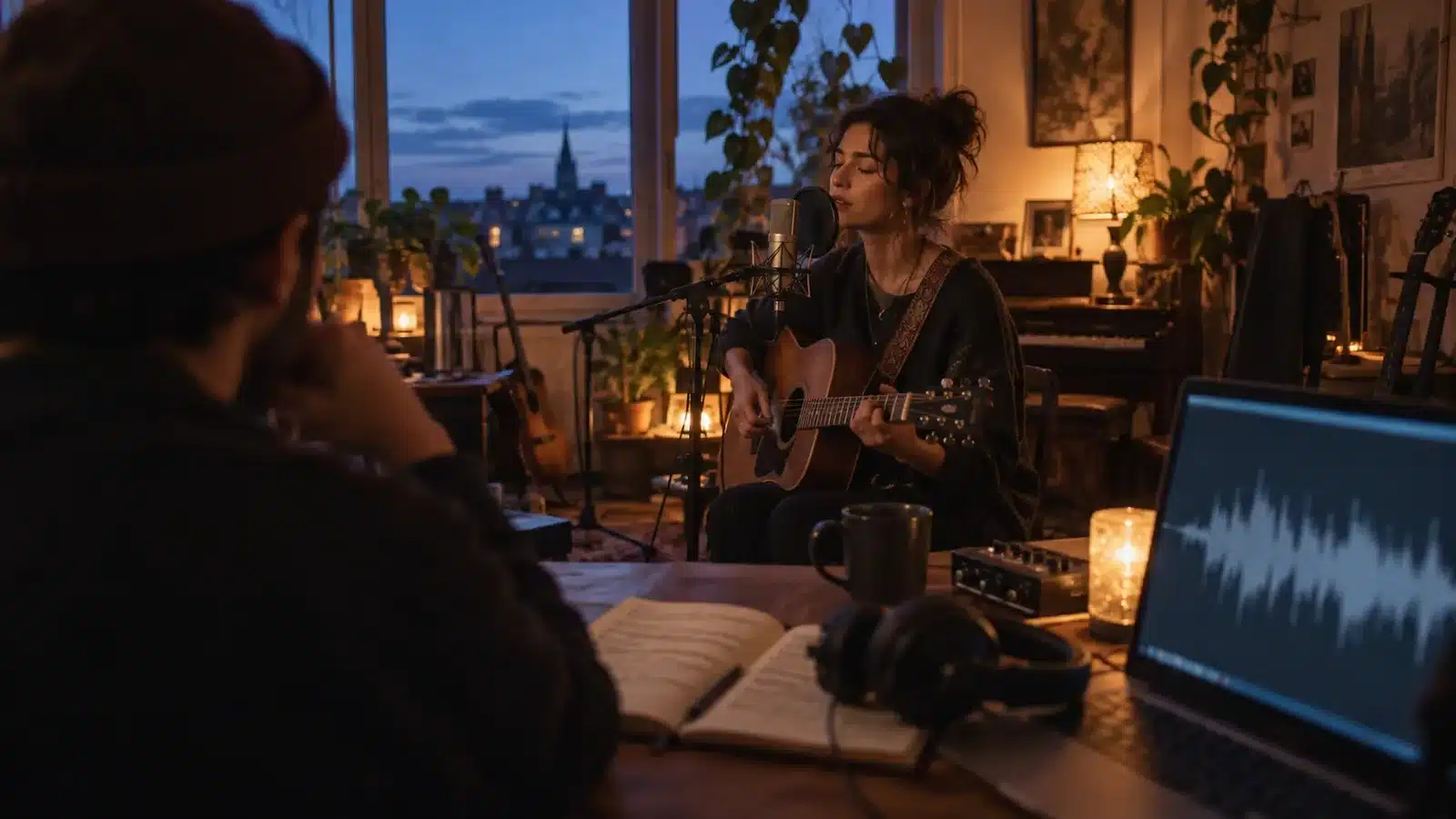
Streaming made almost every song available, but it also made music unusually easy to hear without context.
A track can arrive between two recommendations with little more than a title, a cover image and a few seconds to earn attention. We may enjoy it without knowing what the artist intended, where the lyric came from or how the song changes when it is performed in a room rather than delivered by an algorithm.
Spotify’s new partnership with Genius is an attempt to put some of that missing context back beside the music. Announced on 11 September, the agreement brings full episodes of Genius’ Open Mic performance series to Spotify and expands Verified, the series in which artists explain their lyrics, themes and creative decisions.
The interesting change is not simply that Spotify has added more video. It is that a streaming service built around immediate access is making space for listeners to pause and understand why a song exists.
A Song Rarely Begins With the Audio File
When music reaches a streaming platform, much of the work surrounding it becomes invisible.
The listener hears the finished recording, but not the abandoned verses, the first demo, the argument over one word or the performance that revealed what the song was really about. Credits and biographies can provide information, yet information is not the same as hearing an artist describe a decision in their own voice.
Verified is built around that distinction. Rather than treating lyrics as text to be displayed underneath a track, the format asks artists to explain the experiences and choices behind them. Open Mic approaches the same problem through performance, stripping away some of the distance between a studio recording and the person who made it.
Spotify says the two series have accumulated more than 3.7 billion combined views since launching in 2016. Their popularity suggests that listeners do not only want access to songs. Many also want a way into the world around them.
Context Can Turn a Passing Listen Into Recognition
Music discovery now happens at extraordinary speed. A recommendation can place an unfamiliar artist in front of millions of people, but reach does not guarantee recognition. The song may be heard while someone is travelling, working or moving through a playlist without ever looking at the screen.
Video cannot solve that problem by itself. It can, however, give an interested listener somewhere meaningful to go next.
A performance shows presence, personality and musicianship. A lyric explanation reveals the images, memories or private logic inside a song. Those details create anchors. The artist is no longer only the name attached to a useful track; they become someone the listener may remember.
In The Hardest Part of Making Music Isn’t Making Music Anymore, I wrote about why earning attention has become more difficult even as releasing music has become easier. The Spotify–Genius partnership points towards one response: discovery works better when the first listen opens into a story rather than another endless sequence of recommendations.
Streaming Services Are Becoming Editorial Environments
Spotify began as a place to play audio. Its current direction is much broader. Music videos, concert films, artist interviews and now established Genius formats increasingly sit within the same environment as albums and playlists.
That changes the role of the platform. It is no longer only organising access to recordings. It is also deciding which performances, explanations and visual stories appear close enough to a song to shape how listeners understand it.
There is a clear benefit to that proximity. A listener does not have to leave the service, search several platforms and reconstruct the story alone. The path between hearing a track and learning about it becomes shorter.
There is also a reason to remain thoughtful. When one platform controls both discovery and much of the context that follows, its editorial choices gain more influence. The artists selected for a prominent video series receive something more durable than a playlist position: they receive a chance to define the meaning around their work.
That opportunity will never be evenly distributed. Independent artists therefore cannot wait for a platform invitation before explaining what makes their music worth remembering.
The Lesson Is Not “Make More Content”
It would be easy to read this development as another demand on musicians: release the song, film the performance, explain the lyrics, document the process and keep producing material until the next release begins.
That is the wrong lesson.
More content is not automatically more context. A constant stream of clips can make an artist feel less distinct if none of them reveal anything meaningful. The useful question is not how much can be published, but which part of the song’s story helps a listener hear it differently.
Sometimes that may be one live performance. Sometimes it is a short note about a lyric, a photograph from the recording process or an honest explanation of why a particular sound mattered. The scale can be small as long as the detail is specific.
When I wrote about Osken’s “Every Mile Becomes a Question”, the recurring images of roads, distance and changing landscapes gave the release an emotional route into the music. The value was not in surrounding the single with promotional language. It was in helping listeners recognise the questions already present inside the song.
Independent Artists Can Own the Story Around Their Music
A platform feature can introduce an artist to a large audience, but it should not become the only place where the artist’s story lives.
Independent artists and labels can build their own connected archive: a website that collects release notes and credits, a mailing list that speaks directly to listeners, carefully chosen performances, and social posts that lead somewhere more lasting than the next scroll.
This matters because platform formats can change. A series may end, an algorithm may favour something else and an audience built inside one service can become difficult to reach. The artist’s own channels provide continuity.
The strongest approach is not to reject streaming platforms or depend on them completely. It is to use their reach while making sure the relationship can deepen elsewhere.
A listener might first hear a song through a recommendation, watch a performance inside Spotify, read the story on the artist’s website and later join a mailing list or attend a show. Each step adds a little more intention. Discovery becomes recognition, and recognition has a chance to become loyalty.
Music Discovery Needs Somewhere to Go
The Spotify–Genius partnership brings familiar video formats into a new setting, but its larger significance lies in what it says about streaming.
Access is no longer enough to distinguish one listening service from another. The next contest is about attention, understanding and the experiences surrounding the recording. Platforms want to become places where listeners do not only press play, but stay to explore.
For artists, that creates both an opportunity and a reminder. A song should be able to stand on its own, but it does not have to travel alone. A carefully told story can reveal the person behind the recording without reducing the music to an explanation.
Streaming gave listeners almost everything to hear. The more interesting question now is whether it can give them better reasons to care.