
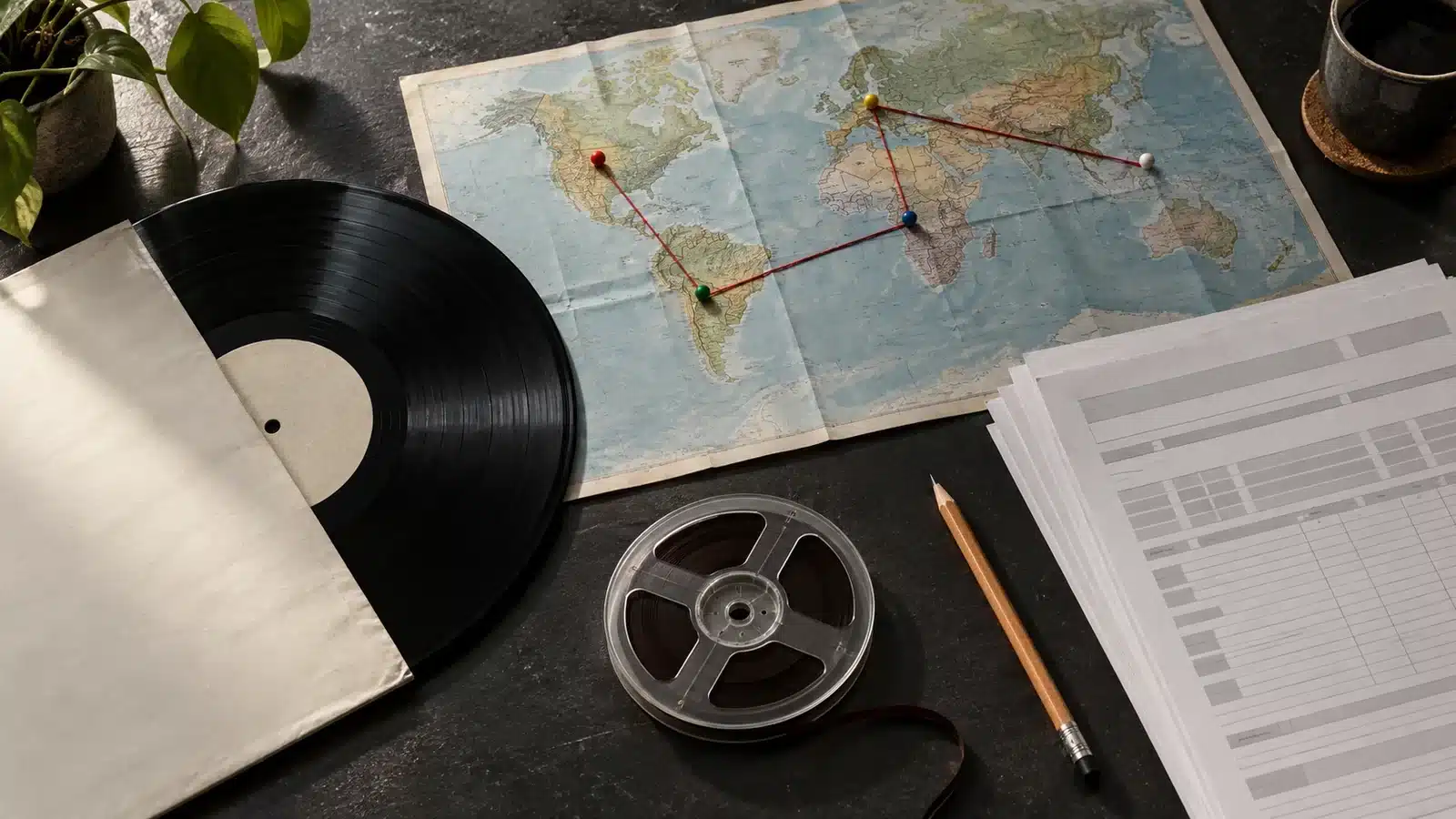
A recording can reach another country before its artist has finished breakfast.
Distribution platforms place music in stores around the world. Social media carries a chorus across borders in minutes. A song may find listeners in places its creator has never visited.
The money does not always travel as easily.
On 17 September, SoundExchange and the UAE-based rights organisation MusicNation announced a reciprocal agreement covering neighbouring rights. The arrangement creates a route for eligible US artists and recording rightsholders to receive royalties when their music is used in the United Arab Emirates, while Emirati performers and rightsholders can receive money from qualifying uses in the United States.
The announcement may sound like a specialist piece of music-business administration. For independent artists and labels, it reveals something fundamental: worldwide availability and worldwide royalty collection are not the same service.
A Play and a Payment Take Different Journeys
Releasing music internationally has become relatively simple. A distributor can deliver one recording to streaming services in dozens of territories through a single dashboard.
Royalty collection remains fragmented because different rights, laws and organisations operate in each market. A platform may report and pay one kind of income through a distributor, while another payment depends on a collecting society identifying the recording, matching it to the correct performers and owners, and moving the money through an international agreement.
Neighbouring rights belong to this second world. They concern the public performance or broadcast of a sound recording and can generate income for featured performers and the owners of the recording. They are separate from the copyright in the underlying song, which protects the composition and lyrics.
The details vary between countries and types of use. In the United States, SoundExchange administers statutory royalties for certain non-interactive digital performances. Other territories may recognise a broader range of uses. That variation is precisely why reciprocal agreements matter: they connect systems that do not automatically speak to one another.
What the New Agreement Changes
SoundExchange says the MusicNation partnership creates a cross-border payment pathway between the United States and the UAE. Artists and rightsholders represented by SoundExchange can collect eligible neighbouring-rights royalties from uses in the UAE. MusicNation can do the same for the Emirati creators it represents when qualifying uses occur in the United States.
Some collecting organisations already partnered with SoundExchange may also choose to include the UAE within their existing mandates. That could extend the route beyond artists based in the two countries.
The agreement arrives while the UAE develops a more formal collective-rights infrastructure. The country’s Ministry of Economy granted MusicNation a collective music-management licence in June 2025. The organisation says its work covers neighbouring rights, public performance and mechanical rights.
None of this guarantees that every play will create a payment. A use must fall within the relevant legal and licensing system, and the organisations still need accurate information to identify who should receive the money. The agreement builds a road. Artists and labels must make sure their recordings can be found on it.
Metadata Becomes Money When a Recording Travels
A royalty system cannot pay a person it cannot identify.
That makes ordinary release information unusually important. Artist names must remain consistent. International Standard Recording Codes need to follow the correct masters. Performer credits, ownership shares and contact details must be accurate. The rightsholder also needs to register repertoire with the organisation responsible for collection.
Small mistakes can become expensive at international scale. A changed artist spelling, missing performer or unregistered recording may prevent usage data from matching the correct account. The money can exist without reaching its destination.
SoundExchange’s international service illustrates the process. Members must complete an international mandate authorising the organisation to collect abroad, and SoundExchange then works through agreements with partner collecting societies. Its current network includes more than 100 agreements with over 75 organisations.
That network is valuable, but it cannot replace the artist’s own release records. Clean metadata is not clerical decoration added after the creative work. It is part of the route between the recording and its income.
Global Distribution Can Create a False Sense of Completion
Independent artists often see a world map inside their distributor analytics and reasonably assume that the financial system has become global too.
The map proves that listeners can find the music. It does not prove that every relevant right has been registered, licensed or collected in each territory.
A distributor usually handles revenue connected to the recording on the services it supplies. A performing-rights organisation may handle the composition. Neighbouring-rights income can require another registration or mandate. Direct sales, physical products, publishing and live performance introduce still more paths.
The result is not necessarily that an artist has been underpaid by a platform. It may be that no organisation has been authorised to claim a particular right in a particular country.
This is an easy blind spot for a small team. Release day demands artwork, masters, promotion, pitching and audience communication. Rights administration feels less urgent because its value appears later and often in smaller statements. Yet the catalogue grows with every release, and so does the amount of information that must remain correct.
Rights Infrastructure Is Part of Audience Growth
In Europe’s Music Market Is Growing. The Bigger Opportunity Is Participation, I wrote about the large audience that recorded music can still reach as more listeners enter paid services. Greater participation is encouraging, but artists benefit fully only when the rights infrastructure expands with the audience.
The same principle applies to emerging music markets. A country can add streaming subscribers, venues and commercial uses quickly. Collection systems need licensing relationships, reliable data and reciprocal agreements before money can move back to creators elsewhere.
This is why the SoundExchange–MusicNation deal matters beyond the United States and the UAE. It shows the less visible work required when a music market becomes more connected. The cultural exchange may begin with listeners. The economic exchange needs institutions.
For an independent label, that infrastructure can influence long-term strategy. A recording that gains a modest audience across many territories may never produce one dramatic payment. Proper collection can still turn scattered uses into meaningful catalogue income over time.
What Independent Artists and Labels Can Do
The first step is to map the rights around each release. Identify the composition, the master recording, the featured performers and the recording owner. Keep splits, credits and identifiers in a record that the whole team can verify.
Next, check which organisations currently represent those rights and territories. Artists should not assume that joining one society automatically covers every right everywhere. They should also avoid granting overlapping or conflicting mandates without understanding the terms.
For neighbouring rights, performers and recording rightsholders can ask their local collective-management organisation which territories it covers directly and through reciprocal agreements. SoundExchange members who want international collection should confirm that they have completed the relevant mandate and registered their repertoire.
Finally, review the data after release. New versions, remasters, collaborations and ownership changes can create discrepancies. A short administrative check for every master is easier than reconstructing an entire catalogue years later.
These tasks are not glamorous, but they protect the value of the work. The most useful rights system is not the one with the longest list of countries on a website. It is the one that can connect a specific use to a specific recording and the correct people behind it.
A Global Audience Needs a Global Route Home
Music has always crossed borders more freely than the business surrounding it. Digital distribution widened that gap by making access feel immediate while rights collection remained territorial and complex.
The new US–UAE agreement closes one part of that distance. It gives artists and rightsholders a clearer path between use and payment in two markets whose systems were not previously connected in this way.
Its larger lesson is practical. Reaching listeners abroad is only the beginning of an international release strategy. Artists and labels also need accurate data, appropriate registrations and organisations capable of carrying royalties back across the same borders.
A song can travel almost anywhere. A sustainable music economy makes sure its value can find the way home.
Frequently Asked Questions
What are neighbouring rights?
Neighbouring rights are rights connected to the public performance or broadcast of a sound recording. Depending on the country and type of use, they can generate royalties for featured performers and recording rightsholders. They are separate from the copyright in the underlying composition.
Does worldwide distribution collect every international royalty?
No. A distributor generally collects income from the services and rights covered by its agreement. Publishing, neighbouring rights, public performance and other uses may require separate registrations, mandates or collecting organisations.
Who can receive neighbouring-rights royalties?
Featured performers and owners of sound recordings may qualify. The exact eligibility, uses and payment rules depend on the law and collection system in each territory.
What should an independent artist check first?
Confirm that every master has a correct ISRC, performer credits and ownership information. Then ask the relevant collecting organisation which rights and countries it covers and whether an international mandate is required.