
An archive can preserve a recording for decades without returning it to musical life.
The tape survives. A catalogue number proves that the performance exists. Researchers may know where to find it. Yet most listeners never hear the voice, the room or the moment that someone worked so carefully to document.
On 18 September, Qobuz and the Lomax Archive opened one such collection. Seven newly restored albums now bring 77 performances from Alan Lomax’s American Patchwork recordings to streaming audio for the first time.
The collection moves through Delta blues, Appalachian ballads, New Orleans brass bands, Mardi Gras Indian traditions and other forms of American roots music. These are not modern recreations of an older sound. Lomax and his crews recorded the musicians between 1978 and 1982 in homes, neighbourhood bars, churches and community spaces.
That difference gives the release its power. It also raises a larger question: when does a preserved recording become part of culture again?
Preservation Is Only the First Step
Saving a recording from physical decay matters. So does cataloguing it accurately and keeping the original material available for future study. None of that automatically creates a listener.
Archives have their own forms of invisibility. Collections can be technically accessible but difficult to navigate. A search may require specialist knowledge, while an unlabelled file offers little reason for a curious listener to press play. Abundance can hide music as effectively as scarcity.
The American Patchwork release does more than transfer old audio to a new format. Producer David Katznelson selected seven album-length stories from more than 900 recordings. Restoration engineer Jessica Thompson worked from archival sources to improve clarity without removing the character of the original performances. Aaron Gresham then gave each release a distinct visual identity.
Those editorial choices create an entrance. The archive remains larger than the release, but listeners now have a considered place to begin.
The Room Is Part of the Recording
Many recordings in the collection began outside conventional studios. That setting matters because traditional music often carries the relationships of a particular place.
The Dirty Dozen Brass Band appears at the Glass House in New Orleans. The White Eagles perform at Darrell’s Lounge. R.L. Burnside sings and plays in the North Mississippi Hill Country, while Sam Chatmon reflects on a life connected to Delta blues. Frank Proffitt Jr. carries Appalachian songs and dulcimer traditions into another generation.
A studio might have produced cleaner separation between instruments. It could not have reproduced the same social environment. Conversation, response, movement and room sound belong to the meaning of these performances.
That makes restoration a delicate act. The engineer must reveal detail without polishing away the conditions that made the recording valuable. Noise can obscure music, but complete smoothness can also distort history.
The best restoration does not make an old performance pretend to be new. It helps the listener meet it more clearly on its own terms.
Streaming Can Carry Context—or Strip It Away
Digital distribution removes one obvious barrier. A listener no longer needs to visit a physical archive or locate an out-of-print recording. The music can sit beside contemporary releases inside the same service.
That convenience creates another risk. When an archival performance enters an endless catalogue, it can lose the place, people and circumstances that explain why it matters. A song recorded on a porch or in a neighbourhood gathering can appear as another isolated track between recommendations.
I recently wrote about this tension in When Streaming Gives a Song Its Story Back. Access becomes more meaningful when the listener can follow it into credits, history and the artist’s own world.
Archival music needs that context even more. Accurate names, recording dates, locations, performers and restoration credits allow listeners to understand that they are hearing real communities rather than a vague idea of “old music.” Good notes do not place glass around the recording. They restore the human relationships inside it.
The People Behind the Archive Still Matter
Historical recordings often reach new audiences long after the original performers have died. That distance can make an archive look ownerless, even when families and communities still carry a direct connection to the work.
The Lomax Archive label has chosen a more responsible model. It says proceeds from its releases will be shared with the Association for Cultural Equity and the families of the musicians. The label also invites descendants to contact it about participation in future royalties.
This does not settle every question surrounding field recordings. Documentation has always involved power: who holds the machine, who names the performance, who controls the copy and who benefits when the recording finds a market.
Sharing revenue with participating families is therefore more than a generous addition. It recognises that preservation should maintain relationships with the people whose culture created the archive.
An ethical reissue cannot change the circumstances of the original recording. It can make better choices about what happens next.
Independent Labels Can Do Work That Scale Often Misses
This release also shows why small, specialised music organisations remain important.
A large catalogue business naturally looks for recordings that can reach a broad audience quickly. Archival work often demands the opposite rhythm. Someone has to spend time identifying material, checking credits, contacting families, restoring difficult sources and deciding how several recordings belong together.
The Lomax Archive operates as a label through a partnership involving Alan Lomax’s family, the Association for Cultural Equity and experienced independent music professionals. Qobuz provides distribution, editorial presentation and an audience interested in complete albums and high-resolution sound.
Neither organisation needs the collection to behave like a current chart release. Its value lies in depth, cultural memory and the possibility that a listener may discover a tradition that commercial music history has treated as peripheral.
Independent labels often work best in this space. They can care for a narrow catalogue with unusual patience, then build the bridge between specialist knowledge and ordinary listening.
An Archive Should Create New Listening, Not Only Nostalgia
It would be easy to frame American Patchwork as a journey back to a more authentic musical past. That would reduce the performers to symbols and miss what remains alive in the recordings.
These musicians did not perform so that future audiences could feel wistful about a vanished world. They played for people around them, worked inside evolving traditions and made creative decisions in the present tense.
In Why Reinterpreting Music Can Be More Powerful Than Chasing Nostalgia, I explored how older music gains energy when artists engage with it rather than merely imitate its surface. An archive can support the same process. It gives musicians and listeners a chance to hear detail, variation and personality that simplified genre histories leave out.
A young producer may notice the rhythm in a work song. A songwriter may hear how a traditional line changes in one singer’s hands. A band may recognise that community participation shaped the performance as much as the notes.
That is not nostalgia. It is transmission.
The Future of an Archive Is an Audience
The seven albums do not complete the American Patchwork story. They represent one selection from hundreds of recordings and many hours of filmed material. More importantly, they demonstrate what can happen when preservation, restoration, editorial judgment and distribution work together.
An archive protects possibility. A release activates it.
When listeners can hear the music, understand where it came from and identify the people who made it, historical material stops behaving like a sealed room. It becomes part of the conversation again.
The most meaningful measure of this project will not be whether the recordings briefly appear on a new-release page. It will be whether people keep listening, follow the histories behind the performances and carry something from them into the music culture of the present.
Preservation keeps a recording from disappearing. Careful release work gives it another chance to matter.
Frequently Asked Questions
What is Alan Lomax’s American Patchwork?
American Patchwork grew from field recordings and films that Alan Lomax and his crews made across the American South and Southwest. The material later became a five-part PBS television series about regional music, dance and cultural traditions.
What was released in September 2026?
Qobuz and the Lomax Archive released seven restored albums containing 77 performances recorded between 1978 and 1982. The audio had not previously appeared as standalone streaming albums.
Where can listeners hear the collection?
The seven albums and an introductory Alan Lomax American Patchwork playlist are available through Qobuz.
Do performers’ families benefit from the releases?
The Lomax Archive says it shares proceeds with the Association for Cultural Equity and participating families. It also asks descendants of featured musicians to contact the label regarding future royalties.
Sources
- Qobuz: Partnership With the Lomax Archive Brings 77 Historic Performances to Digital Audio, 29 July 2026.
- Qobuz: Alan Lomax American Patchwork playlist.
- Lomax Archive: Mission, partnerships and royalty approach.
- Library of Congress: Alan Lomax Collection.
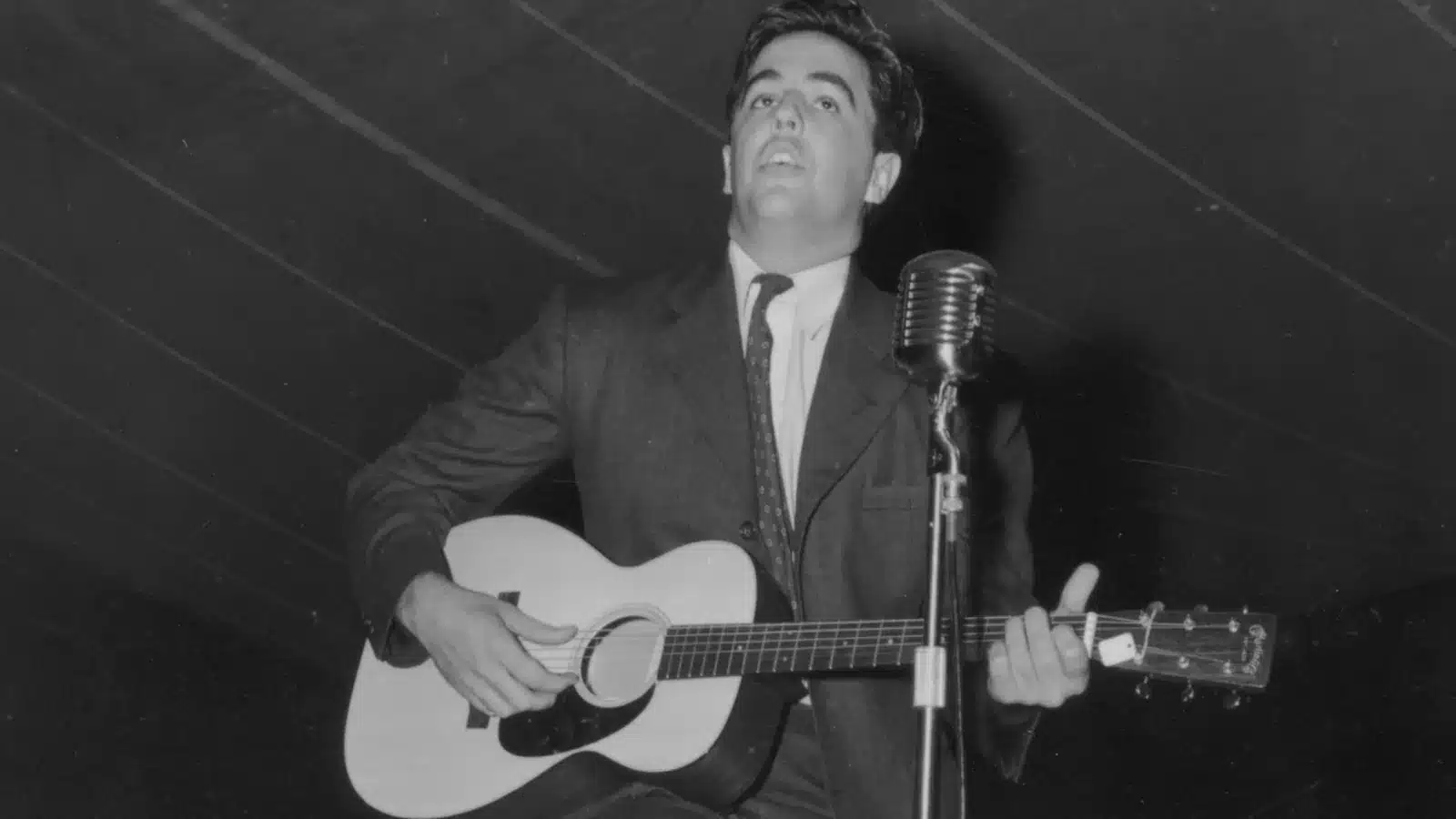
Feature image: Alan Lomax performing at the Mountain Music Festival in Asheville, North Carolina, circa 1938. Library of Congress, Lomax Collection. Public domain.