
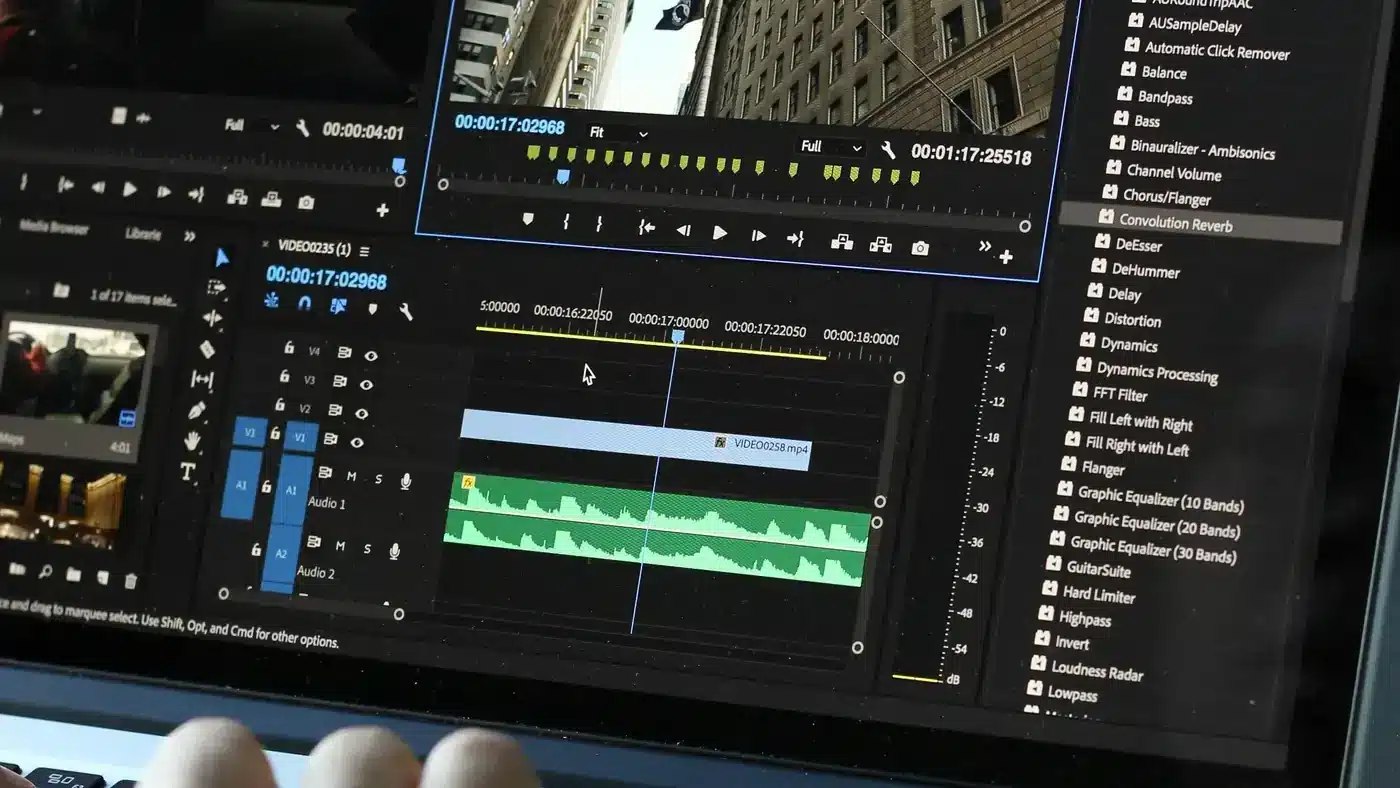
A song can now enter a video before the video reaches a social platform.
Adobe has announced that Premiere mobile will soon include licensed music clips from Universal Music Group and Warner Music Group. Creators will be able to search, preview and place up to 60 seconds of music inside an edit, then share the finished work to social platforms covered by the licence.
The immediate story is a new feature. The more important story is where the musical decision is moving.
For years, short-form video platforms have trained people to choose music at the moment of upload. This deal moves that choice upstream, into the editing timeline itself. The soundtrack becomes part of the composition rather than a layer added at the end.
Discovery Is Moving Into the Creative Process
A listener usually encounters a track after someone else has finished making the video around it. Premiere mobile changes the sequence. The creator can browse music while deciding how the story should move.
Adobe says users will be able to search by artist and track, filter by genre and duration, save favourites and browse collections selected by the labels. Music-powered templates will give the track an even earlier role in the process.
That matters because discovery does not only happen when someone presses play on a streaming service. It can begin when a creator hears a song and imagines what it might do inside a scene.
A track chosen at that stage may shape the pace of the cuts, the length of the video and the emotion of the final image. Music is no longer competing for attention beside the finished content. It helps determine what the content becomes.
The Editing Timeline Is Becoming a Music Shelf
Every built-in music library is also a form of curation.
The order of search results, the quality of metadata and the collections placed in front of creators will influence which songs are heard. A familiar track may be chosen because its name is already known. A less obvious one may travel further because it appears in the right collection or fits the required duration.
This gives labels another place to present a catalogue. It also makes the details around presentation more important. Genre labels need to be useful. Artist names and track titles need to remain attached to the music. A song should not become an anonymous mood simply because it is easy to drag into a timeline.
The most valuable discovery would not end with a usable clip. It would give viewers a clear route back to the artist and the complete recording.
Licensing Is Part of the Product
The feature is not a general licence for every kind of video.
Adobe describes the announced clips as available for personal, non-commercial use. Finished videos can be exported and shared to licensed social platforms. Commercial projects continue to use Adobe Stock Audio.
That distinction deserves attention. A creator making a personal post and a brand making an advertisement are not performing the same use, even when both videos last thirty seconds.
Clear boundaries help creators avoid treating every available track as universally cleared. They also protect the value of music when a video is designed to sell a product, promote a business or become part of a paid campaign.
The most useful implementation will make those boundaries understandable at the point of choice. Licensing information should feel like part of the creative tool, not a legal surprise after the edit is complete.
Sixty Seconds Can Still Change a Song’s Context
Adobe says creators will be able to add up to 60 seconds of a track. That is long enough to include more than a quick hook.
A full minute can contain an introduction, a build and part of a chorus. It can also remove a lyric from the verse that gave the chorus its meaning. Editing creates a new context, even when the source recording remains unchanged.
For artists and labels, this is both the opportunity and the risk. The right scene can reveal something in a song that listeners had not noticed. Repetition across unrelated videos can flatten the same track into a familiar signal.
Neither outcome is controlled entirely by the rights holder. Once music becomes a creative material inside a widely used tool, its public meaning is partly shaped by the people who choose and cut it.
The Independent Question Is Access
The first announced music partners are two major record groups. That gives the feature scale and recognisable catalogue from the beginning. It also raises an obvious question for independent labels and artists: how will music outside those catalogues enter the same workflow?
Adobe has not announced that answer in these releases, so it would be premature to assume a route exists. The question still matters because tools shape habits. If creators learn to choose music from a library embedded in the editor, music that is absent from that library becomes harder to imagine inside the work.
A credible independent route would need more than a bulk upload. Artists and labels would need understandable terms, accurate metadata, control over permitted uses and transparent reporting. Smaller catalogues would also need genuine ways to be found rather than simply being technically available.
Access without discovery can leave music in the room while keeping it off the shelf.
Convenience Should Lead Somewhere
For a creator, the appeal is immediate. There is less searching across services, less uncertainty about whether a track can be used and less friction between hearing an idea and trying it in the edit.
For an artist, convenience is useful only when the attention remains connected to the music.
A viewer who likes the soundtrack should be able to identify the artist. A creator should know how to credit the recording. The artist should have a chance to turn a moment inside someone else’s video into a listen, a follow or a deeper interest in the catalogue.
In Direct-to-Fan Is a Relationship, Not a Checkout Button, I wrote about why discovery needs a path towards an ongoing connection. The same principle applies here. A clip can create attention, but the surrounding product decides whether that attention has somewhere meaningful to go.
A New Place Where Songs Begin to Travel
Music has always moved through other media. Radio, film, television, advertising, games and social video have each given songs new contexts and new audiences.
What changes here is the timing. The music enters before the video is finished, inside the tool where the creator is still deciding what the story will be.
That makes the editing timeline a new point of music discovery, licensing and influence. It may help songs travel further because they are easier to use. It may also strengthen the advantage of catalogues that secure early access to the tool.
The real measure will not be how many tracks are available on launch day. It will be whether artists can be found, identified and valued when their music becomes part of someone else’s story.
Frequently Asked Questions
Can Premiere mobile users use the new music clips commercially?
No. Adobe says the announced UMG and WMG clips are for personal, non-commercial use. Commercial projects can continue to use Adobe Stock Audio.
How much of a song can a creator use?
Adobe says creators will be able to add up to 60 seconds of a licensed track to a video.
When will the music library be available?
Adobe says the feature is coming soon, but the announcement does not give a specific release date.
Sources
- Adobe: Premiere mobile adds music from UMG and WMG, 3 November 2026.
- Universal Music Group: Adobe Premiere mobile adds music from UMG, 3 November 2026.
- Warner Music Group: News and announcements, 3 November 2026.