
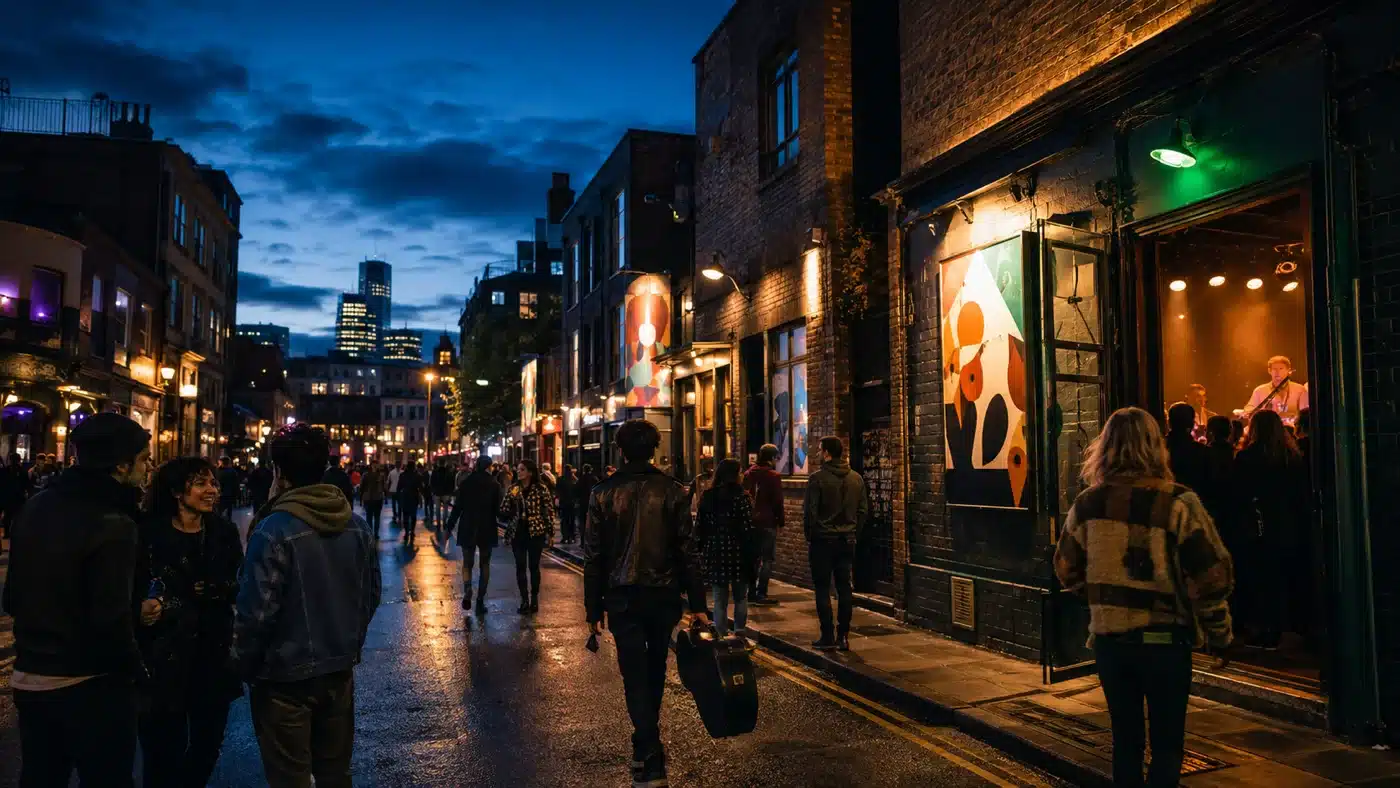
An awards ceremony can create one brilliant night. A music scene needs something that still matters the morning after.
That is what makes the newly revealed 2026 Mercury Prize Fringe in Newcastle more interesting than the familiar procession of nominations, performances and trophies. From 15 to 22 October, more than 30 events will spread across the city: gigs, workshops, listening sessions, conferences, masterclasses and creative experiences. The Mercury Prize Awards Show follows at Utilita Arena Newcastle on 22 October.
The programme suggests a useful idea for the wider music world. A major prize does not have to land in a city, borrow its atmosphere and leave. It can distribute attention through the venues, artists and organisations that make the place musically alive in the first place.
When an Awards Show Becomes a City Programme
The Mercury Prize moved outside London for the first time when Newcastle hosted the 2025 ceremony. Its return in 2026 could have been a straightforward repeat: a national event in a regional arena, with most of the attention concentrated on the stage.
Instead, the Fringe turns the week around that stage into a network.
Generator, the North-based music development organisation powering the programme, has announced activity in venues and cultural spaces across Newcastle. The range is deliberately broad. Emerging artists will play alongside more established names. Local promoters and venues will curate showcases. There are sessions on management, music-video craft, production, regional growth and the practical journey from a demo to a finished master.
That variety matters. A healthy music culture is not made by performers alone. It also depends on promoters, engineers, managers, producers, designers, educators, small venues and curious listeners. Bringing those groups into the orbit of a high-profile award makes the event feel less like an industry visit and more like a temporary accelerator for the city’s existing ecosystem.
Prestige Is Most Useful When It Circulates
Music awards are built to concentrate attention. A shortlist reduces an enormous field of releases to a manageable set. A ceremony turns months of listening and discussion into a single public moment. That concentration is part of their value—but it is also their limitation.
Attention fades quickly. The question is whether the prestige can circulate before it does.
The Fringe offers several answers. Playing Out at Freight Island places emerging talent alongside established artists and includes conversations as well as performances. BBC Introducing’s event at The Glasshouse creates another discovery point for independent artists. Ear to the Ground brings Newcastle artists into direct contact with industry guests and gives participating acts recordings they can use afterwards.
These are not identical opportunities, and none guarantees a career. But each converts a portion of the wider spotlight into something more practical: a new audience, a professional connection, stage experience, usable material or a better understanding of how music is made and sustained.
That is important at a time when the hardest part of making music is often getting anyone to notice it. Discovery rarely fails because there is too little music. It fails because listeners lack context, trusted guides and reasons to stop scrolling. A city-wide programme can give an unfamiliar artist all three.
Small Venues Are Part of the Prize
The geography of the programme may be as significant as its content. Events are not confined to the arena. They reach into The Globe, Cobalt Studios, The Cumberland Arms, The Grove, Zerox, The Lubber Fiend, Gingerino’s and other independent or community-facing spaces.
Generator says every Fringe gig supported by Newcastle City Council will operate on a pay-as-you-feel basis, with the contributions going back to the host venues. That model lowers the barrier for audiences while recognising that access cannot be built by asking venues to absorb every cost.
Awards often celebrate finished recordings, but those recordings emerge from a much wider ecology. Artists need rooms where they can be inexperienced in public. Scenes need promoters willing to take a chance on a new name, sound engineers who understand an unruly first set and audiences prepared to arrive before the headliner.
I recently wrote about why local music scenes are built through relationships, not scale alone. Venues are where many of those relationships become real. Routing a national cultural moment through them does more than add atmosphere to an awards week; it acknowledges that they are infrastructure.
Artist Development Happens Around the Performance
The live showcases will naturally attract the most immediate attention, but the less visible parts of the Fringe may leave the longer trail.
A production masterclass at Blank Studios follows Sam Grant through the making of Pigs Pigs Pigs Pigs Pigs Pigs Pigs’ Death Hilarious, from home demos to stereo and Atmos masters. Another session explores the creation of album artwork and visual identities. A Music Managers Forum workshop focuses on the changing responsibilities and business models of management. An event at Polestar Studios looks inside the songwriting, tracking, production, mixing and mastering of an album.
For an emerging artist, these are not side issues. Music careers are shaped by thousands of decisions made away from the spotlight: how to prepare a session, choose collaborators, communicate an identity, understand a contract, finish a recording and present it to the world. Making that knowledge more accessible is a form of artist development, even when no artist leaves with a trophy.
The same is true at the youngest end of the programme. Mini Mercury x First Gigs will give selected musicians aged 12 to 18 experience of preparation, technical advancing, soundcheck and performance alongside venue staff and engineers. It is a small intervention, but it reveals the larger principle: participation teaches more than proximity.
There Is Evidence the Wider Model Can Work
Newcastle City Council says almost 8,000 people attended Mercury Prize-related activity across the North East in 2025. Its published assessment puts the combined economic and cultural impact at more than £1.4 million, while the event generated work-experience opportunities and activity for children as well as visitor spending.
Those figures come from one edition and should not be treated as a universal formula. A festival programme can produce busy rooms without fixing the structural problems facing artists and venues. Short-term visibility is not the same as sustainable funding, affordable space or a viable touring circuit.
Still, measurement matters. If a major award claims to benefit its host city, the useful questions are concrete: Who was paid? Which venues received income? How many first-time performers gained experience? Did local organisations form relationships that continued after the event? Did audiences discover artists they returned to later?
The 2026 Fringe creates more places where those outcomes could begin. Its success should ultimately be judged not only by attendance during Mercury week, but by what remains connected afterwards.
A Better Blueprint for Cultural Events
Not every music award can build a programme of this size, and not every city needs a national ceremony to validate its scene. The transferable lesson is simpler.
When a cultural event arrives with money, press and industry attention, it should ask how those resources can strengthen what already exists. That might mean commissioning local promoters rather than importing every decision; paying grassroots venues rather than using them as decoration; giving emerging artists meaningful stage time; opening professional knowledge to people outside established networks; and making audiences curious about the city beyond the main event.
This approach does not diminish the shortlisted albums or the drama of the prize. It gives the celebration a wider foundation. The ceremony can still be the brightest point, but it no longer has to be the only point.
The best music awards tell us what deserves attention now. The most valuable ones also help create the conditions for whatever deserves attention next.